
Your Guide to Paraben Free Skincare: Cheat Sheet
Discover the essentials of paraben free skincare, including product tips, label identification, and side effects in our comprehensive cheat sheet.
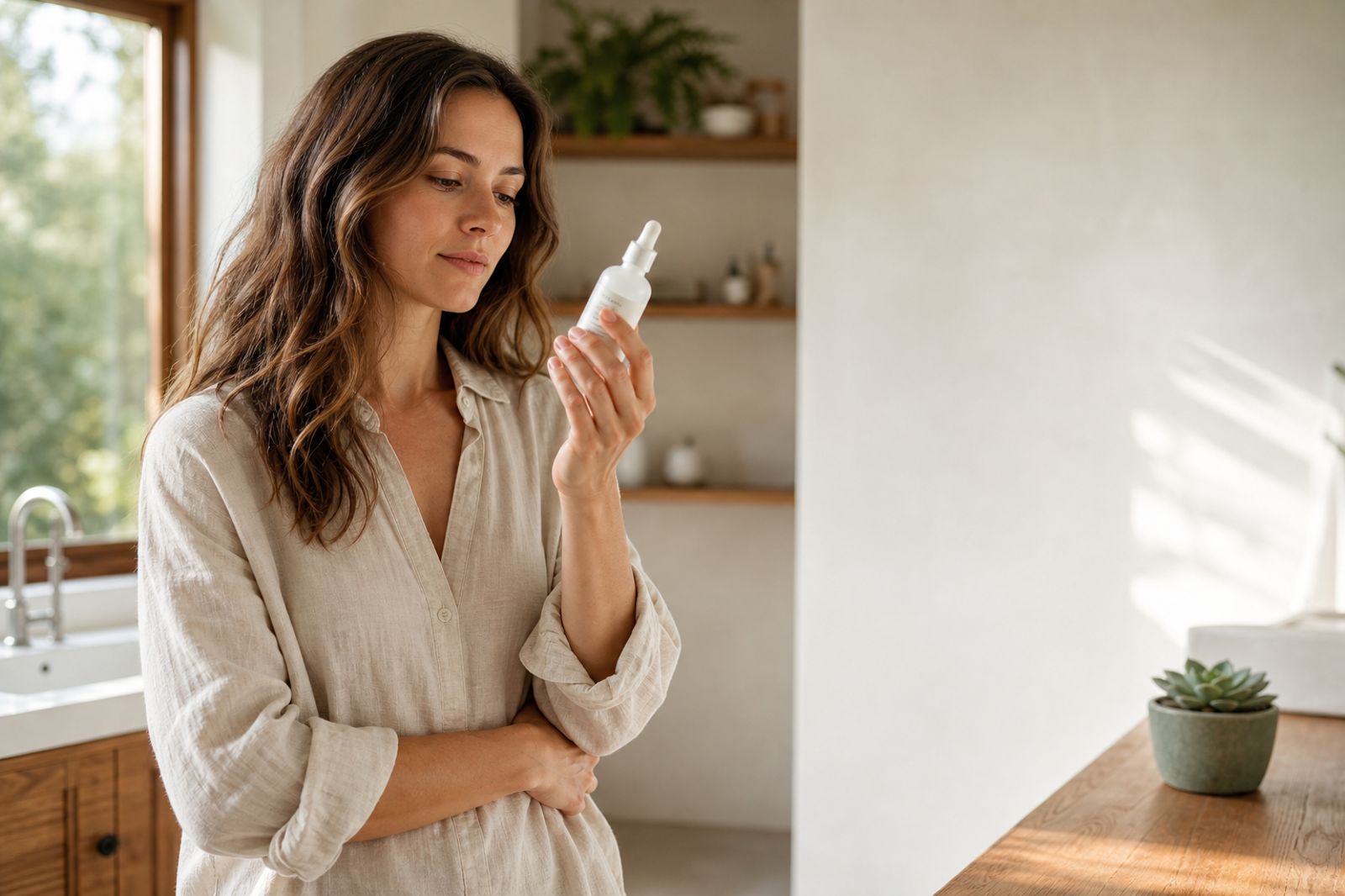
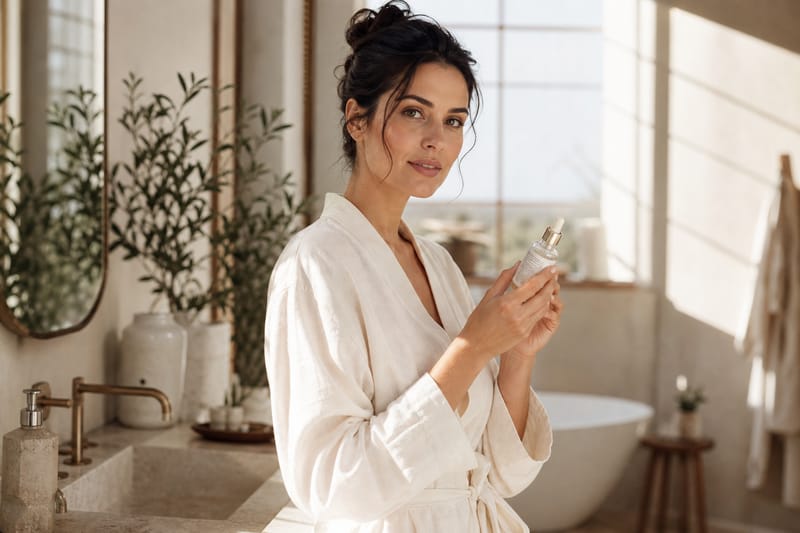
Woman in cream linen shirt reading ingredient label on skincare bottle in bright minimalist bathroom with natural daylight
Paraben-free skincare has shifted from niche to mainstream — sixty-eight percent of consumers now scan ingredient lists before buying. This cheat sheet covers what parabens are, how to spot them on labels, and the best paraben-free brands to know.
Looking for the bigger picture? See our complete guide to organic skincare for everything from ingredient basics to building a truly clean routine.
Parabens 101: What They Are and Where They're Found
Parabens are synthetic preservatives used in cosmetics since the 1920s to prevent microbial growth and extend shelf life. An estimated seventy to ninety percent of conventional beauty products contain at least one as of 2025.
- Methylparaben — the most common; found in moisturizers, cleansers, foundations
- Propylparaben — used in lotions, sunscreens, liquid foundations
- Butylparaben — appears in hair products, body creams, shampoos
- Ethylparaben — less common; in fragranced products and toners
- Isopropylparaben — restricted in the EU, still permitted in US formulations
- Isobutylparaben — also EU-restricted; found in some imported products
Label rule: any ingredient ending in "-paraben" is a paraben. Because "paraben-free" is unregulated in the US, trust the ingredient list — never the front label.
Are Parabens Bad for Your Skin?
The question "are parabens bad for skin?" centers on their ability to weakly mimic estrogen, a mechanism that has drawn regulatory scrutiny worldwide. Parabens have been detected in human breast tissue, and in vitro studies suggest links to breast cancer cell proliferation, though no causal link in humans has been established at typical cosmetic exposure levels.
- Parabens absorb through skin and accumulate with daily use across multiple products
- Contact dermatitis (redness, itching, flaking, hives) affects sensitive individuals
- The FDA's November 2025 review found no evidence of harm at current usage levels
- The EU has banned five paraben types; the US has no federal restrictions
- Clean beauty market: $10.49 billion in 2025, projected $35.30 billion by 2033 (16.8 percent CAGR)

Paraben-Free Skincare Brands: Quick Reference Table
Major beauty brands across every price tier now offer paraben-free formulations and paraben free moisturizer options.
| Brand | Known For | Paraben-Free Status | Price Tier |
|---|---|---|---|
| Tata Harper | Nutrient-dense natural formulas | 100% paraben-free as of 2026 | Premium |
| Biossance | Squalane-based clinical clean beauty | 100% paraben-free as of 2026 | Mid-Premium |
| OSEA | Seaweed-based organic skincare | 100% paraben-free as of 2026 | Premium |
| True Botanicals | High-performance certified clean | 100% paraben-free as of 2026 | Premium |
| La Roche-Posay | Dermatologist-recommended gentle care | Select lines paraben-free | Drugstore |
| Burt's Bees | Natural ingredients at accessible prices | 100% paraben-free as of 2026 | Drugstore |
| Cetaphil | Sensitive-skin staples | Select products reformulated | Drugstore |
| Clinique | Allergy-tested dermatology | Most lines reformulated | Mid-Range |
| bareMinerals | Mineral-based complexion and skincare | Most products paraben-free | Mid-Range |
Preservatives That Replace Parabens
Brands removing parabens turn to alternative preservative systems that maintain shelf stability without the endocrine-disruption profile.
- Phenoxyethanol — the most common alternative, used across most clean beauty formulations
- Ethylhexylglycerin — a preservative booster typically paired with phenoxyethanol
- Benzyl alcohol — plant-derived, effective against bacteria and yeast
- Sorbic acid — naturally occurring from rowan berries, gentle on skin
- Grapefruit seed extract — natural antimicrobial option
- Rosemary extract — antioxidant-rich stabilizer for oil-based products
- Vitamin E (tocopherol) — prevents rancidity in oil formulations
Both phenoxyethanol and ethylhexylglycerin appear across the majority of paraben free skin care products in the clean beauty skincare space, making them the industry-standard replacement system. For a paraben free face cream, look for these preservatives on the label.

What skincare products do not contain parabens?
Most dedicated clean beauty brands are 100 percent paraben-free. For a paraben free face wash, try Biossance squalane cleanser or Burt's Bees sensitive facial cleanser. Many shoppers seeking skincare without parabens start here.
Is paraben-free good for your skin?
For contact dermatitis sufferers, paraben-free formulations can reduce redness and irritation. Paraben-free products often use newer, gentler preservative systems alongside higher-grade ingredients.
How do I identify parabens on a label?
Scan for any word ending in '-paraben': methylparaben, propylparaben, butylparaben, ethylparaben, isobutylparaben, isopropylparaben. Brand claims like 'natural' do not guarantee paraben-free — only the ingredient list is definitive.
What is the difference between EU and US regulations?
The EU has banned five paraben types. The paraben free meaning difference matters: the US has no federal restrictions, so same-brand products may use different preservatives in European versus American markets.
Are parabens linked to breast cancer?
In vitro studies show parabens can promote breast cancer cell growth, and residues have been detected in breast tissue. No causal link in humans has been established at typical cosmetic exposure levels.
Why Clean Beauty Brands Are Reshaping the Skincare Industry
Clean beauty brands command a $10B market with 16.8% CAGR growth. Retailer standards and consumer demand are making clean beauty a permanent shift.
10 Best Natural Moisturizers for Every Skin Type
Discover the 10 best natural moisturizers for dry, oily, and sensitive skin — from $16 drugstore finds to $110 luxury oils, all editor-vetted.
What Is Clean Beauty Skincare? A Complete Beginner's Guide
Learn what clean beauty skincare means, how it differs from natural and organic, and which certifications to trust when building a clean routine.