
Thrift Flipping: Turn Secondhand Finds Into 2026 Trends
Learn how to thrift flip with this step-by-step guide — from sourcing to stitching, turn thrift store finds into trend-forward 2026 style.
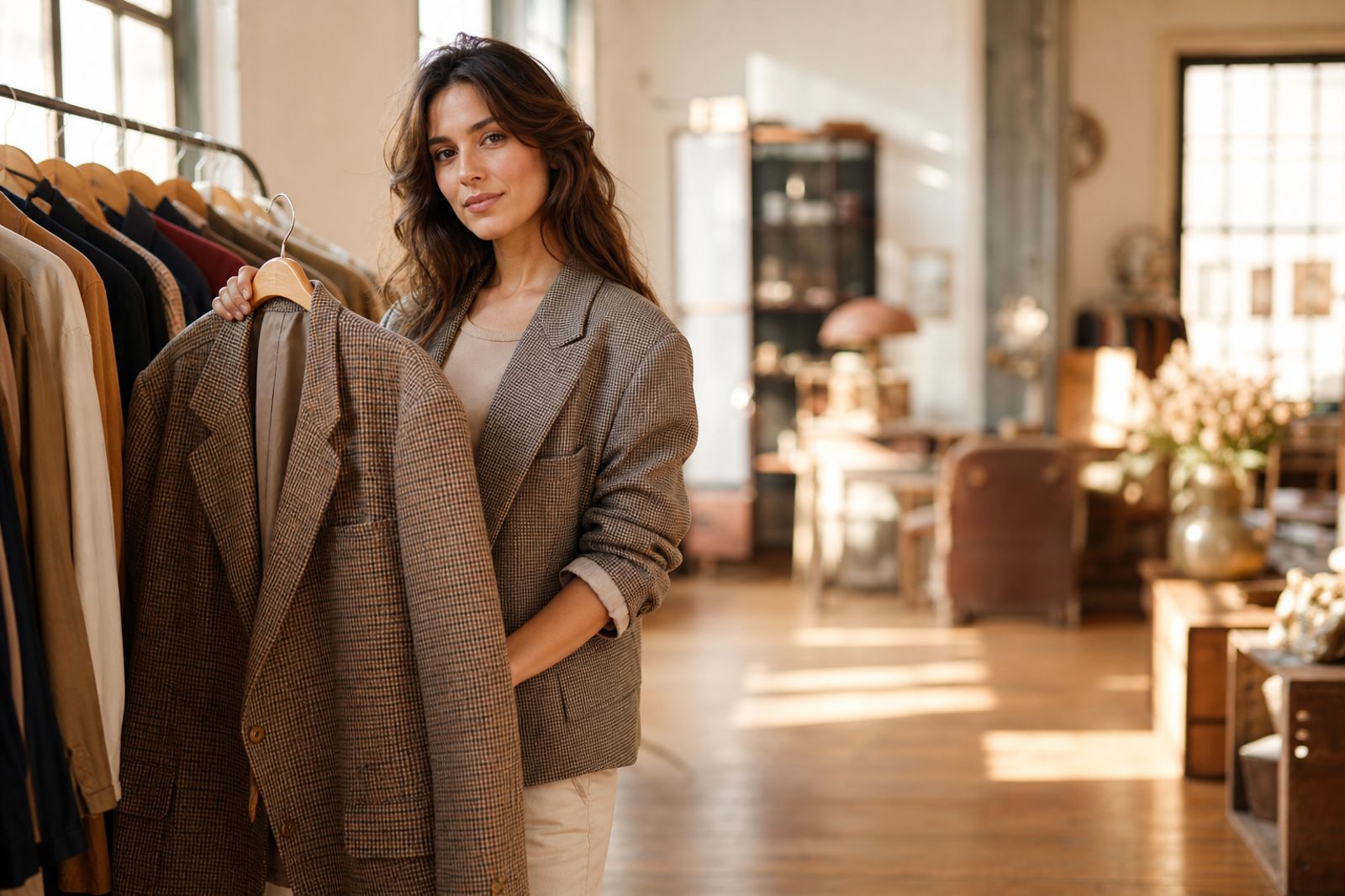
Woman examining vintage clothing on a thrift store rack, evaluating an oversized blazer

Updated June 14, 2026
Thrift flipping — reworking secondhand clothing into trend-forward pieces — has become one of 2026's defining style moves. The U.S. secondhand apparel market grew 13 percent last year, outpacing broader retail by four times, and thrift store foot traffic is up nearly 40 percent since 2019. This guide walks you through the full process, from sourcing to stitching, so you can turn overlooked thrift finds into wardrobe staples that feel entirely now.
Use the table of contents to navigate each step.
What You'll Need to Start Thrift Flipping
Every successful thrift flip starts with a small, focused toolkit. You do not need a professional sewing studio — just a handful of reliable basics and a clear eye for potential.
- Fabric scissors — sharp enough to cut denim and heavier knits cleanly
- A basic sewing machine — even a $100 starter model handles most alterations
- Seam ripper — for cleanly removing collars, pockets, and hems you want to reshape
- Tailor's chalk — marks cutting lines without staining
- Iron and pressing cloth — essential for crisp hems and flat seams
- Measuring tape — body measurements and garment measurements both matter

Beyond tools, develop a sourcing strategy. The secondhand market currently accounts for 16 to 18 percent of American shoppers' annual clothing purchases, and online resale alone is growing at more than 14 percent a year. That volume means good stock is abundant — but so is competition. Focus on pieces with quality fabric, interesting texture, or a silhouette you can meaningfully alter rather than minor cosmetic fixes.
Step 1: Source Smart at the Thrift Store
Source smart at the thrift store by walking in with a plan, not a vague hope. The best thrift flippers scan for three things: fabric quality, structural integrity, and transformation potential.
High-value categories to target:
| Category | Why It Works | Flip Potential |
|---|---|---|
| Oversized blazers | Strong shoulders, quality fabric | Crop, cinch, or reline for a modern silhouette |
| Men's dress shirts | Generous yardage of cotton or linen | Convert to off-shoulder tops, wrap dresses, or upcycled shirt bags |
| Denim | Durable, easy to distress or dye | Cut into shorts, add patches, create two-tone panels |
| Silk blouses | Expensive fabric at a fraction of retail | Restyle into camisoles, scarves, or pillow covers |
| Maxi skirts | Large fabric panels | Transform into midi dresses or wide-leg pants |
Arrive early on restock days — most Goodwill and Salvation Army locations restock Tuesday through Thursday mornings. Check the men's section as aggressively as the women's; oversized menswear is the single richest source of upcycling clothes projects.
Step 2: Assess and Deconstruct
Assess each piece and deconstruct carefully: lay your finds flat at home and evaluate before cutting anything. Ask three questions: What is the best feature of this garment? What dated element makes it feel thrifted? Can I remove or reshape that element without destroying the piece?
Begin deconstruction with a seam ripper, not scissors. Removing a collar, peeling off shoulder pads, or opening a side seam preserves maximum fabric and gives you clean edges to work with. Photograph each piece before and during deconstruction — the reference shots help when you lose track of how something was assembled.

Step 3: Reshape, Reconstruct, Refit
Reshape, reconstruct, and refit — this is where thrift flipping becomes creative work. The most reliable transformations for beginners:
- Crop and hem — shorten an oversized blazer or sweater to hit at the natural waist. A single straight hem is the easiest alteration and changes the entire proportion.
- Take in the sides — dart or seam oversized pieces to match your measurements. Pin first, try on, then sew.
- Add contrast panels — splice two garments together. A denim back panel on a cotton shirt creates a piece that reads as entirely new.
- Dye or bleach — Rit dye transforms faded or stained pieces. A $3 bottle of navy dye turns a worn khaki blazer into something sharp.
- Embellish — embroidery, iron-on patches, or visible mending in contrasting thread adds character that mass-produced clothing cannot replicate.
Each of these techniques works on its own or in combination. A blazer that is cropped, taken in, and dyed is three alterations deep — and no one will guess it started on a thrift rack. Upcycled shirts are especially versatile — a single men's dress shirt can yield a cropped top, a wrap skirt, or a set of matching accessories.
Step 4: Style Your Upcycled Pieces Into Outfits
Style your upcycled pieces into outfits by treating each flip as a wardrobe addition, not a costume. The goal is not a costume — it is a wardrobe addition that feels intentional. Pair a cropped thrifted blazer with your existing high-waisted trousers. Wear a reconstructed men's shirt with tailored shorts. Layer a dyed denim jacket over a simple cotton dress — the same mix-and-match logic behind glamoratti styling works just as well with thrifted pieces.
The strongest thrift-flipped wardrobes follow a capsule wardrobe logic: each new piece should work with at least three outfits you already wear. If it only works with one, it is a statement — which is fine occasionally, but not a sustainable flipping strategy.

Step 5: Sell What You Don't Keep
Sell what you don't keep — many thrift flippers turn the hobby into income. Online resale platforms move upcycled and altered pieces at a premium because the buyer gets something unique. List with clear before-and-after photos, accurate measurements, and honest descriptions of what was altered. Pieces with visible, intentional alterations — contrast stitching, raw hems, deconstructed seams — sell better than pieces that try to hide their origins.
What Successful Thrift Flipping Looks Like
A finished thrift flip is a garment that looks intentional, fits well, and costs a fraction of comparable retail. The average thrift store purchase runs $3 to $8; adding $5 in materials and 45 minutes of labor produces a piece that would retail for $60 to $120 in a comparable quality. That math — combined with the environmental case for extending garment life — is why thrift flipping fashion in 2026 is less a trend and more a permanent shift in how thoughtful dressers build their wardrobes.
Reselling Thrift Flips: Platforms, Pricing, and What Actually Sells
The resale case for thrift flipping is stronger in 2026 than at any previous point. The U.S. online resale market reached an estimated $21 billion in 2025, per ThredUp's annual Resale Report, and buyer appetite for one-of-a-kind, altered, and upcycled pieces has grown faster than the platform average. Standard secondhand resale relies on brand recognition; thrift flipping adds transformation value, which commands a different pricing logic.
Platform selection by piece type:
| Platform | Best For | Fee Structure (as of 2026) | Audience |
|---|---|---|---|
| Depop | Upcycled, altered, youth-facing | 10% seller fee + payment processing | Under-35 buyers seeking unique pieces |
| Etsy | Handmade, embellished, vintage-adjacent | 6.5% transaction + listing fee | Buyers specifically seeking craft and alteration |
| Vinted | Clean resale, minimal alteration | Buyer pays fees; seller keeps full price | Volume resellers seeking frictionless listing |
| eBay | Higher-end vintage, blazers, quality silk | 13.25% final value fee | Wider demographic, strong search discovery |
| Bespoke work, commissions | No platform fee; payment via third party | Followers who've tracked your transformation process |
Pricing formula: start at three to five times your total cost (purchase price plus materials). A blazer bought for £4 and dyed and cropped for £6 in materials should list at £30 to £50, not £12. The premium is for the transformation labour and uniqueness, not the material cost. Research comparable pieces on the same platform before listing — search your transformed piece's category (e.g., "cropped navy blazer vintage") and price at the median or slightly above if your alteration is visible, intentional, and well-executed.
What sells fastest: altered blazers and structured jackets consistently achieve the highest sell-through rates and the strongest margins. Men's dress shirts reworked into crop tops, wrap tops, or off-shoulder styles move reliably because the buyer cannot replicate the transformation without sewing skills. Dyed denim sells well when the dye job is even and professionally photographed. Heavily embellished pieces (hand embroidery, patchwork) sell slowly but at premium prices — factor the time investment honestly before committing.
Photography is the single largest driver of resale success. A flat-lay against a clean white or linen surface, plus one on-body shot showing fit, doubles click-through rates compared to a single image. Per Depop's seller guidance updated in 2025, listings with three or more photos sell 60 percent faster than single-image listings.
Thrift Flipping on a Budget: Keeping Transformation Costs Under £30/$35
The economics of thrift flipping break down when material and tool costs exceed the value the transformation adds. Staying under £30 per flip requires material discipline and a toolkit that spreads its cost across multiple projects.
Cost allocation by project type:
| Transformation | Avg. Material Cost | Tools Required | Notes |
|---|---|---|---|
| Crop and hem | £0–£2 (thread only) | Sewing machine, scissors | Cheapest alteration; highest frequency of use |
| Dye (solid colour) | £3–£5 (Rit or Dylon) | Dye bath, rubber gloves | One bottle covers up to 500g of fabric |
| Bleach fade or pattern | £2–£4 (household bleach) | Spray bottle, gloves | Unpredictable — test on scrap first |
| Contrast panel splice | £4–£8 (second garment) | Sewing machine, seam ripper | Source the panel from a second thrift find |
| Iron-on patches or appliqué | £3–£8 (per pack) | Iron, pressing cloth | No sewing required; easy to execute well |
| Basic embroidery accent | £4–£10 (thread and hoop) | Embroidery needle | Labour-intensive but adds strong uniqueness value |
A complete beginner toolkit — sharp fabric scissors, a seam ripper, tailor's chalk, and a pressing cloth — runs approximately £18 to £25 from Amazon or a haberdashery. A starter sewing machine adds £80 to £120 but spreads across hundreds of projects; the per-project cost is negligible after the first twenty flips.
The highest-return low-budget move is dyeing. A £3.50 bottle of Dylon machine dye transforms a stained, faded, or visually uninteresting piece into something clean and new. Uniform colour-dyed pieces photograph well, list easily, and remove the need to disguise original flaws. Combined with a £2 hem crop, a total investment of under £10 in materials produces a piece with a realistic £25 to £45 list price.
One budget discipline that experienced flippers consistently report: do not buy a thrift piece if you cannot identify the transformation within thirty seconds of picking it up. Vague potential ("I could probably do something with this") produces pieces that sit unaltered and eventually get donated back. Specific potential ("crop this to the waist, add contrast thread at the hem, dye slate grey") produces finished flips.
What to Avoid When Thrift Flipping: Materials and Alterations That Don't Work
The errors in thrift flipping are predictable and avoidable. Most come down to fabric choice, structural overreach, or a mismatch between alteration ambition and actual skill level.
Fabrics that resist transformation:
Rayon and viscose lose their structural integrity under the heat required for dyeing and pressing; rayon-heavy blends also fray aggressively when cut without immediate serging. Avoid any piece that is more than 50 percent rayon if you plan to reshape it significantly. Heavily bonded or fused fabrics — common in cheap fast-fashion blazers where the interlining is glued rather than sewn — peel and bubble when heated and cannot be re-pressed flat. Run your hand along the inside of any blazer before buying; a papery, stiff interlining indicates bonding rather than sewn construction.
Acetate satin is the most frequently misidentified fabric in thrift stores. It looks like silk but reacts badly to water, iron heat above low, and most dyes. If you cannot identify the fabric content from a label, hold a small interior seam near a lit match for two seconds — acetate melts and smells acrid; silk chars cleanly and smells faintly of burning hair. Only attempt this test in a safe setting and on a seam, never the garment face.
Alterations that cost more than they return:
Replacing a zip on a structured garment — particularly a concealed side zip on a dress or trousers — requires precision that justifies the labour cost at a tailor (£15 to £30) but rarely makes economic sense on a thrift find that cost £5. If the zip is broken and cannot be sourced as-found, bypass the piece entirely unless the fabric is genuinely exceptional.
Structural re-lining is the most over-ambitious beginner alteration. A coat or blazer that needs a new lining requires cutting, pinning, and hand-tacking the entire interior — typically two to four hours of skilled work. At that labour investment, the thrift-store find needs to be exceptional quality to justify the effort. For beginners, avoid any piece where re-lining is necessary for the flip to work.
Finally, over-embellishment: adding patches, embroidery, dye, and cropping to the same garment produces a piece that reads as maximally altered rather than intentionally transformed. Each transformation should have a single clear point of difference from the original. One strong alteration well-executed outsells three competing alterations on the same piece, per consistent reseller feedback on Depop's seller community forums as of 2025.
Is thrift flipping beginner-friendly if I can't sew?
Yes. Many of the most effective transformations — cropping with fabric glue, dyeing, adding patches, distressing denim — require zero sewing skills. Start with no-sew projects and add machine sewing as your confidence grows.
What is the best type of clothing to flip for resale?
Oversized blazers and men's dress shirts consistently yield the highest return. Both offer quality fabric at low cost, and the transformation from oversized thrift to tailored vintage commands the strongest markup.
How much money can I make thrift flipping?
Part-time flippers who source 10 to 15 pieces per week typically net $200 to $500 monthly after material costs. Volume sellers on resale platforms report $1,000 to $3,000 per month.
Does thrift flipping actually help reduce fashion waste?
Every upcycled garment extends a clothing item's useful life and displaces one new purchase. With the secondhand market growing at 14 percent annually, the cumulative diversion from landfill is substantial and accelerating.
Capsule Wardrobe 2026: The Complete Guide to Building Yours
Build a capsule wardrobe in 2026 with the 3-3-3 rule, seasonal essentials, and trend tips. Fewer pieces, better style, less waste.