
How to Build a Capsule Wardrobe: A Step-by-Step Guide
Learn how to build a capsule wardrobe with 30 to 40 versatile pieces. Covers closet audit, color palettes, essentials, and the 3-3-3 rule.
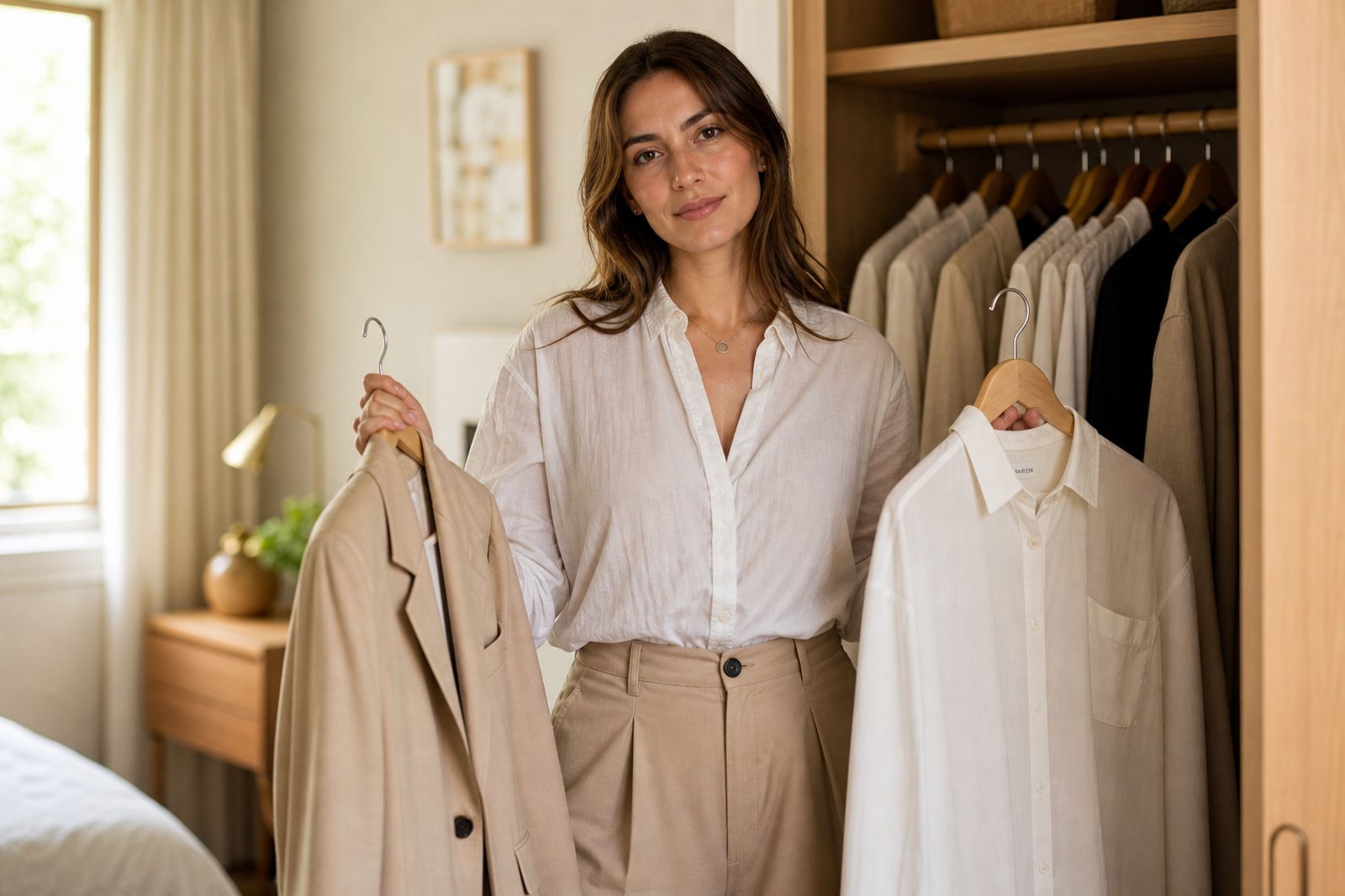
Woman sorting through a wardrobe holding a neutral blazer and white shirt in soft morning light

Updated June 14, 2026
Learning how to build a capsule wardrobe begins with one decision: stop buying outfits and start building a system. A capsule wardrobe is a curated collection of 20 to 40 versatile pieces designed to mix and match across every occasion — work, weekends, travel, and evenings out. The average American household spends $1,800 per year on clothing, yet wears only 20% of what they own regularly. A capsule wardrobe flips that ratio. What you will need before starting: two uninterrupted hours to audit your closet, a full-length mirror, and the willingness to part with pieces that no longer serve you.

Step 1: Audit Your Current Closet
A capsule wardrobe guide starts with honesty about what you already own. Pull every item from your closet and divide it into three piles: wear weekly, wear monthly, and barely touched. Research shows the average person wears only 20% of their wardrobe on a regular basis, which means 80% of your closet is dead weight. Set aside the barely touched pile — if you have not reached for something in six months, it is unlikely to earn a spot in your capsule. Keep a running list of the gaps you notice: missing basics, worn-out essentials, or colors that do not coordinate with anything else. This audit becomes the foundation for every purchase that follows.
Step 2: Define Your Personal Style and Color Palette
A minimal wardrobe women love works only when every piece speaks the same visual language. Choose a base palette of three neutral tones — navy, black, camel, grey, or white — then add one or two accent colors that flatter your complexion. This constraint sounds limiting, but it unlocks the real power of a capsule: any top pairs with any bottom, and any layer works over any base. Narrowing your palette to five colors maximum means fewer decisions each morning and more outfits from fewer pieces. Assess your lifestyle split — if 60% of your week is office-based, weight your capsule toward tailored separates rather than casual wear.
Step 3: Fill the Gaps with Intentional Pieces
Every capsule wardrobe checklist shares a common core of essentials that anchor hundreds of outfit combinations. Start with these ten foundation pieces, then layer in seasonal or personality-driven items:
- Dark straight-leg or slim-fit denim
- Crisp white button-down shirt
- White and black crew-neck or V-neck tees
- Neutral knitwear (cashmere or merino crewneck)
- Tailored trousers in charcoal or navy
- Structured blazer in your base neutral
- Trench coat or lightweight outer layer
- Everyday leather or quality vegan handbag
- Minimal white sneakers
- Chelsea boots or loafers
The table below compares the investment against fast-fashion spending:
| Metric | Capsule Wardrobe | Fast Fashion |
|---|---|---|
| Annual spend | $1,200–$3,000 (year one) | $1,800 per year |
| Cost per wear | $2–$5 | $15–$25 |
| Average lifespan | 3–5 years per piece | 7–10 wears |
| Closet utilization | 80–100% of pieces | 20% of pieces |
| Textile waste impact | Near zero with one-in-one-out | 81.5 lbs per person/year |
These ten pieces alone generate over 40 distinct outfits when paired across tops, bottoms, and footwear. The total investment for quality versions of these items ranges from $1,200 to $3,000 — roughly the same as one year of fast-fashion spending — but each piece lasts three to five years with proper care.

How Do You Apply the 3-3-3 Rule for Quick Capsule Wins?
The 3-3-3 rule distills capsule wardrobe pieces down to just nine items: three tops, three bottoms, and three shoes. These nine pieces create a minimum of 27 outfit combinations — enough to dress for nearly a month without repeating a look. The rule works especially well for travel packing or for anyone easing into a capsule wardrobe for the first time. Choose your three tops from a mix of casual and polished (a tee, a blouse, a knit), three bottoms that span dress codes (denim, tailored trousers, a skirt or second pair of trousers), and three shoes that cover all terrain (sneakers, flats or boots, a dressier option). Once the 3-3-3 system feels natural, expand gradually toward the full 30 to 40 piece range.
Step 4: Build a Seasonal Rotation
A capsule wardrobe guide that stops at the initial build misses the system's best feature: seasonal rotation. Store off-season pieces in a dedicated bin or section of your closet, and swap five to eight items each time the weather shifts. Summer weight linens and sandals give way to wool knits and boots in autumn; spring brings back lighter layers and open-toe shoes. This rotation keeps your capsule feeling fresh without expanding your total count. The global secondhand apparel market is projected to reach $350 billion by 2028, making it easier than ever to find quality transitional pieces at a fraction of retail price. Treat rotation as maintenance, not shopping — the goal is to keep your core collection at 30 to 40 pieces year-round while adapting to the season.
Step 5: Maintain Your Capsule with the One-In-One-Out Rule
Capsule wardrobe pieces stay curated only when you enforce boundaries after the initial build. The one-in-one-out rule is simple: every new item that enters your closet means one existing item leaves. This prevents the slow creep of accumulation that dismantles a capsule within a year. When evaluating a potential purchase, ask three questions: does it work with at least three pieces I already own, does it fill a genuine gap in my wardrobe, and will I wear it at least 30 times? Fewer than 1% of discarded clothing is recycled into new garments globally, so every intentional purchase is also an environmental decision. Quality over quantity is not just a style principle — it is a sustainability practice that reduces textile waste and the 11.3 million tons of clothing Americans send to landfills each year.

The Essential 30-Piece Capsule Wardrobe List for 2026
A capsule wardrobe works only when every item is named, not implied. Below is a categorised list of 30 specific pieces that form a complete, year-round capsule for 2026 — one you can rotate seasonally without exceeding the count. These are not vague categories; they are specific garment types you can walk into a shop and identify.
Tops (8 pieces)
- White cotton-poplin button-down shirt — collarless, spread collar, or classic collar, but always in 100% cotton with enough body to hold its shape untucked.
- Black crew-neck tee in heavyweight cotton — at least 200gsm. This is the piece that reads intentional rather than filler.
- White crew-neck tee in the same heavyweight cotton — a companion to the black, not an afterthought.
- Ivory or camel fine-gauge merino or cashmere crewneck — the workhorse layering knit. It should sit smoothly under a blazer without bunching at the sleeves.
- Grey marl fine-gauge knit in a V-neck or crew cut — the neutral alternative when ivory reads too dressed or camel reads too warm.
- Silk or silk-blend camisole in ivory or black — doubles as a layering piece under blazers and as a standalone on warmer evenings. This is the CBK-effect piece.
- Ribbed turtleneck in black or navy — not a chunky roll, but a fitted fine-rib that sits flush against the neck and layers cleanly under outerwear.
- Striped Breton or mariner top in navy/white or black/white — the one top with inherent character, requiring no styling effort to read considered.
Bottoms (7 pieces) 9. Dark indigo straight-leg or slim-fit jeans — dark enough to read near-formal with a blazer, relaxed enough for weekend wear. No distressing, no fading. 10. Black tailored wide-leg trousers in wool crepe or ponte — the elevated bottom for every work and smart-casual situation. 11. Charcoal or navy slim-fit tailored trousers — a second tailored option in a different silhouette, for days when wide-leg reads too casual or dramatic. 12. A-line or pleated midi skirt in a neutral — black, camel, or olive. This is the piece that shifts an outfit from competent to interesting without adding complexity. 13. Straight-leg or barrel jeans in mid-wash blue — the 2026 denim shape, worn as the casual-day counterpart to the dark indigo. 14. Black slim-fit trousers in stretch fabric — the low-effort travel and weekend option that photographs like tailoring. 15. White wide-leg linen trousers — the spring/summer rotation piece. In rotation for six months; worth buying well enough to last five seasons.
Dresses (3 pieces) 16. Black knit midi or column dress — the single-garment outfit. Worn alone, belted, or under a blazer. This piece absorbs the most accessories without looking overdone. 17. White or ivory wrap dress in crepe or viscose — the dress with the widest occasion range. Day, dinner, travel day, last-minute invitation. 18. Shirt dress in chambray or linen, always belted — the warm-weather casual dress that reads too thrown-on without the belt and perfectly relaxed with it.
Outerwear (5 pieces) 19. Structured blazer in camel or navy — the single most versatile piece in the capsule. Worn over every combination on this list. This is where budget should concentrate. 20. Classic trench coat in khaki or beige — the layer that turns any outfit into an intentional one. Belted at the waist or worn open over dresses and jeans equally. 21. Leather or quality faux-leather jacket in brown or black — the casual outer layer that adds edge. Brown reads warmer and more versatile in AW26 than black. 22. Long wool or wool-blend coat in camel, grey, or charcoal — the cold-weather investment. This coat will appear in more outfit photographs than anything else in your wardrobe between October and March. 23. Lightweight quilted or down vest — the functional layering piece, not a sports piece. Worn over the knit crewneck, under the wool coat, or alone on mild days.
Shoes (4 pieces) 24. White leather minimal sneakers — clean sole, no chunky platform. The sneaker that reads like a considered choice rather than the one you reached for last. 25. Black Chelsea boots or leather ankle boots — the autumn and winter workhorse. Pair with every bottom on this list. 26. Leather loafers in tan, black, or burgundy — the most versatile smart casual shoe, and the one that lifts a relaxed outfit to intentional status faster than any other footwear choice. 27. Strappy leather sandals or block-heel sandals in nude or black — the warm-weather and evening shoe. Low enough to walk in; heeled enough to shift an outfit's formality register upward.
Accessories (3 pieces) 28. Structured leather or quality vegan handbag in a neutral — the daily carry that ties an outfit together. Size matters: large enough for daily life, compact enough to read elegant. 29. Silk or modal scarf in a versatile print or tonal hue — wearable at the neck, in the hair, tied to a bag handle, or folded as a pocket square. 30. One pair of gold and one pair of silver minimal earrings — counted as one accessory slot. The metal you default to informs which shoe hardware, belt hardware, and bag hardware to reach for.
This list generates over 100 distinct outfit combinations across all four seasons. Remove pieces that do not fit your lifestyle — a remote worker who never attends formal meetings can replace one pair of tailored trousers with a second dress — but resist removing pieces before you have tested them. Most underused capsule pieces are underused because of how they were previously styled, not because they are wrong for you.
How to Shop for Capsule Pieces Without Overspending
The first year of a capsule wardrobe is its most expensive — you are building a foundation, not maintaining one. This is where most people either overspend in the wrong categories or underspend and end up with a capsule that wears out too quickly. Budget allocation by category is the planning tool that prevents both errors.
Invest most where cost-per-wear is highest. Per 2026 consumer wear-frequency data, outerwear is worn more consistently across a wider range of outfits than any other category — a good coat can be worn 100-plus times per year for five years, generating a cost-per-wear figure that no fast-fashion equivalent can match. Shoes follow closely: quality construction determines whether a pair lasts one season or a decade.
| Category | Recommended Budget Share | Notes |
|---|---|---|
| Outerwear | 30–35% of total | Worn daily for 4–6 months, lasts 5–10 years |
| Shoes | 20–25% | Comfort and construction determine longevity |
| Bottoms | 20% | Denim is worth buying once at quality |
| Tops and knitwear | 15–20% | High frequency, but easier to replace cheaply |
| Dresses | 10% | Lower frequency unless your lifestyle demands them |
| Accessories | 5–10% | One good bag earns its spend; scarves are cheap |
To calculate cost-per-wear: divide the purchase price by the number of times you realistically wear the item per year, then multiply by its expected lifespan in years. A £280 camel blazer worn three times per week for 48 weeks across five years costs approximately 39p per wear. A £45 trend top worn six times before it loses its shape costs £7.50 per wear. The difference in value is not subtle.
Budget tiers for the full 30-piece build:
- Under £1,500 total: prioritise secondhand for outerwear and shoes, which hold quality at resale better than any other category. Platforms including Vestiaire Collective, eBay Fashion, and Vinted list quality pieces at 40–70% below retail (as of 2026). Buy basics — tees, knitwear — new, where fabric quality is the variable and the price differential is smaller.
- £1,500–£3,000: mix high-street and mid-market for tops and bottoms; invest in one or two anchor outerwear pieces new. A £400 wool coat and a £300 leather jacket bought once represent better value than replacing their high-street equivalents every eighteen months.
- £3,000+: invest across all categories in long-lasting construction. At this budget, the break-even point against five years of equivalent fast-fashion spending has already been passed by year two.
Three operational rules to avoid overspending during the build phase: never buy a piece that does not work with at least three items you already own; apply a 72-hour waiting period to any item over £100 to separate genuine need from impulse; shop secondhand first for any category where fabric tactility is not the primary differentiator — scarves, basic knitwear, denim, and simple cotton tees all resell in excellent condition. These rules alone typically reduce first-year capsule spend by 25–35% without compromising the final quality of the collection.
Capsule Wardrobe by Lifestyle: Office, Creative, and Remote
A single capsule list serves no lifestyle well if applied uniformly. The 30 pieces above constitute a master list; what changes across lifestyles is the weighting — which pieces you own multiples of, which you can legitimately drop, and where your budget should concentrate. A corporate lawyer and a freelance photographer share a white shirt and dark denim, but the similarities largely end there.
Office worker (corporate or client-facing environment)
Prioritise: tailored trousers in two colours (not just one), blazers in two weights or cuts — one structured for meetings, one unstructured for the rest of the week — and a second pair of smart shoes beyond the loafer (a kitten heel or block-heel pump). Shirts and fine-gauge knits rotate most frequently in this lifestyle, so investing slightly more in their quality pays off faster than it does in other categories.
De-prioritise: the Breton top (too casual for most corporate environments), wide-leg linen trousers (season-specific and rarely office-appropriate), and the casual white sneaker. These pieces have limited daily utility in a client-facing lifestyle and can be added gradually as weekend rotation pieces without consuming budget upfront.
The office capsule's defining combination: slim or wide-leg tailored trousers (black or charcoal), a fine-gauge ribbed turtleneck or poplin shirt, a structured blazer, and leather loafers. This combination handles Monday to Friday across most corporate contexts with minimal variation needed.
Creative professional (studio, agency, editorial, architecture)
Prioritise: barrel jeans, oversized knits, the leather jacket, and one genuinely expressive piece — a printed midi skirt, a statement earring, a coloured coat — because creative environments signal cultural competence through style choices more than any other professional context. Individuality is part of the professional communication here. The blazer remains essential but is worn differently: open over a graphic tee or a print, never buttoned over a blouse.
De-prioritise: slim tailored trousers (too corporate without the surrounding context) and the shirt dress (often reads too conservative in a creative studio). Replace the slim trouser with a second pair of barrel or straight-leg jeans in a different wash.
The creative capsule's defining combination: barrel jeans in mid-wash blue, an oversized knit in a strong colour or texture, the leather jacket worn open, and clean leather sneakers or Salomon-style trail shoes. This combination adapts from studio to gallery opening by swapping the sneaker for a loafer and the leather jacket for the blazer.
Remote or freelance worker
Prioritise: the column dress (low effort, presentable on camera), straight-leg jeans in two washes (the daily bottom across most remote-work situations), comfortable knits in multiple colours, and one structured coat for client meetings and non-home contexts. The remote lifestyle involves more costume changes than it appears — from home working to a coworking space to a client lunch within a single day — so versatility per piece matters more than formality.
The investment priority shifts: rather than outerwear (less frequently relevant when you walk fewer distances) and shoes (less visible on camera), invest in knits and the single coat. A well-cut camel coat signals effort and competence in the handful of client-facing situations that warrant it; your coworking-space uniform of jeans and a knit does not need to be expensive.
All three lifestyle capsules converge on five anchor pieces: a good white shirt, dark denim, a neutral blazer, ankle boots, and a structured bag. These five transfer without adaptation across every context and every lifestyle. When in doubt about what to buy first, buy these five, and build the lifestyle-specific layer from there.
How many pieces should a capsule wardrobe have?
Most capsule wardrobes contain 30 to 40 items, including tops, bottoms, dresses, outerwear, and shoes. Accessories, underwear, and workout gear are typically excluded from the count.
Can I build a capsule wardrobe on a budget?
Yes. Thrift stores, consignment shops, and secondhand platforms offer quality pieces at 60 to 80% below retail. Prioritize fabric quality over brand names, and invest your budget in the pieces you wear most: denim, outerwear, and shoes.
What is the difference between a capsule wardrobe and a minimal wardrobe?
A capsule wardrobe is a specific, curated collection of interchangeable pieces. A minimal wardrobe is a broader philosophy of owning less. Every capsule wardrobe qualifies as minimal, but a minimal wardrobe does not necessarily follow the capsule system of intentional mix-and-match pairing.
How often should I update my capsule wardrobe?
Review your capsule every three months during seasonal rotation. Replace worn items as needed, but resist trend-driven purchases. A well-built capsule stays relevant for two to three years before major updates are necessary.
Womens Fashion Guide: Building a Timeless Wardrobe
A complete womens fashion guide covering 7 essential pieces, sustainable style, and capsule wardrobe strategies for a closet that lasts.
Capsule Wardrobe 2026: The Complete Guide to Building Yours
Build a capsule wardrobe in 2026 with the 3-3-3 rule, seasonal essentials, and trend tips. Fewer pieces, better style, less waste.