
How to Style the Glamoratti Trend Without Looking Costume-y
Learn how to style the glamoratti trend with restraint — one power piece, one accent, one texture at a time. A 4-step guide.
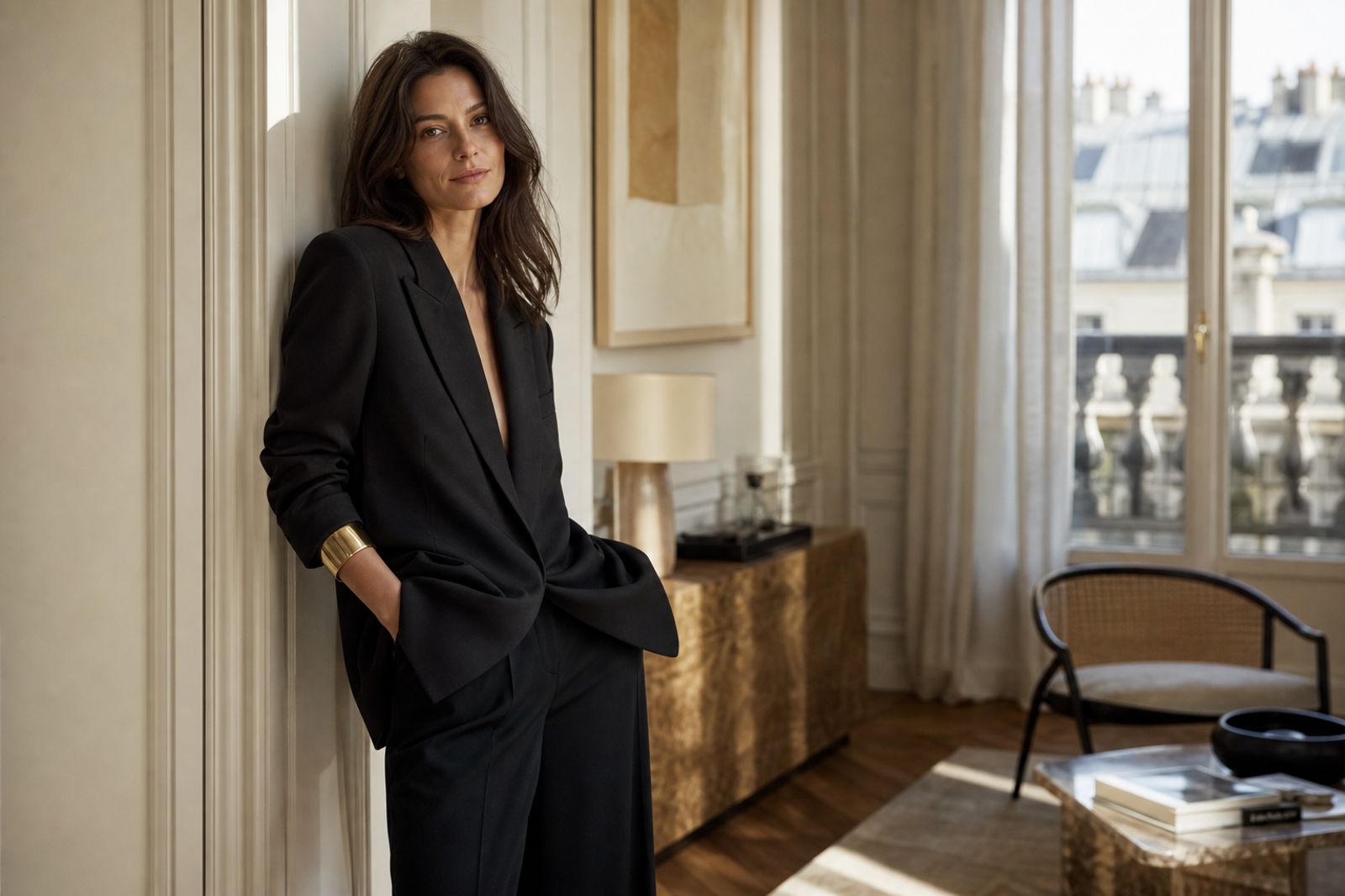
Woman in an oversized black blazer with gold cuffs and tailored wide-leg trousers in a sunlit Paris apartment, embodying the 2026 glamoratti trend

Updated June 14, 2026
From the runways of Milan to the sidewalks of Brooklyn, the glamoratti trend has arrived — and it's louder than anything the fashion cycle has produced in a decade. Glamoratti trend styling takes the maximalist drama of 1980s power dressing and filters it through a 2026 lens: think oversized gold cuffs, crystal-embellished knits, sharp-shouldered blazers, and fur-trimmed everything. But pull the thread too hard and you risk looking like you raided a costume archive rather than a closet. The key is dialing the volume up in measured increments — treating glamoratti as a knob, not a switch. Use the table of contents to navigate each step of the styling process below.
See our complete 2026 fashion guide for the full playbook on dressing for the moment.
What You'll Need Before You Start
Before you start, you'll need five building blocks. Most are pieces a considered closet already contains: a well-cut blazer, dark tailored trousers, a structured bag, plus two or three high-signal accents. Pinterest's 2026 trend report shows searches for "80s luxury" spiking 225% year-over-year, while "baggy suit" queries rose 90% and "chunky belt" searches climbed 65%. That momentum tells you the infrastructure is already in most wardrobes; what's missing is the editorial punctuation.
Gather these building blocks before you begin styling:
- A sharp-shouldered blazer — single-breasted, slightly oversized, in black, navy, or camel
- One metallic or crystal accent — a gold cuff, crystal drop earring, or embellished belt
- Tailored wide-leg trousers — high-waisted, full-length, in a dark neutral
- A structured mini or midi bag — boxy silhouette, minimal hardware
- Optional fur or faux-fur trim piece — a collar, stole, or jacket with plush detailing

Step 1: Anchor the Outfit With One Power Piece
Every glamoratti outfit starts with a single structural anchor — the piece that signals intent without screaming. A sharp-shouldered blazer is the most versatile entry point: it carries the 80s power-dressing DNA that defines the trend while remaining wearable in almost any context. Chanel's Métiers d'Art 2026 collection framed its version as the uniform of "an 80s businesswoman who's going to rule the world," and that energy translates directly to streetwear when you pair it with relaxed bottoms.
Choose your anchor piece and build outward. The blazer should fit through the shoulders but skim the body — too tight reads corporate, too oversized reads sloppy. Pair it with wide-leg trousers in a matching or complementary tone to create a column of color, then let the accessories do the rest of the talking.
Step 2: Add One Accent, Then Stop
Add exactly one accent per outfit, then stop — stacking every maximalist piece at once is the single biggest glamoratti mistake. A chunky gold belt, crystal earrings, and a fur-trimmed collar worn together isn't a trend — it's a theme party. Let that single accent breathe instead. Pinterest data shows "gold cuff" searches up 50% year-over-year, making it the entry-level accent of the season: a single oversized cuff on the wrist of a pushed-up blazer sleeve reads deliberate, not desperate.
If you're drawn to crystals, limit them to one zone — earlobes or neckline, never both. If fur trim is your move, choose a detachable collar or a jacket with a single plush detail at the cuff. The restraint is what separates glamoratti from costume; each accent should feel like a choice, not a compulsion.

Step 3: Introduce Texture Gradually With Fur and Crystals
Introduce texture gradually. Fur and crystals are the two materials that most clearly define the glamoratti aesthetic, and both tip into costume territory the moment you rush them. The solution is to treat each as a texture rather than a statement: a faux-fur collar draped over a cashmere coat adds dimension without volume; a crystal-embellished knit worn under a structured blazer catches light without dominating the silhouette.
Start with one textured piece per outfit. A fur-trimmed cardigan buttoned up as a top, paired with clean tailored trousers and minimal jewelry, lets the texture speak without competition. A crystal-detail sweater layered under a camel blazer gives just enough sparkle at the neckline to register as intentional. The goal is to create a single point of visual interest that draws the eye — not a wall of embellishment that overwhelms it.

How Do You Wear Maximalist Glam Without Overdoing It?
You wear maximalist glam without overdoing it by contrasting excess in one zone with restraint everywhere else. A crystal-embellished top works with flat-front trousers and bare ankles. A fur-trimmed jacket works with a plain white tee and slim dark denim underneath. The 70/30 rule from capsule wardrobe theory applies here too — 70% of your outfit should be clean, tailored basics, and the remaining 30% is where the glamoratti energy lives.
This graduated approach also makes the trend wearable across contexts. Use one lead accent per setting and keep everything else quiet:
| Context | Lead accent | Keep restrained |
|---|---|---|
| Creative office | Single gold cuff + sharp blazer | Trousers, shoes, and bag |
| Dinner / evening | Crystal earring + structured clutch | Everything below the neckline |
| Weekend | A fur-trim detail, or none at all | Rely on fit, not decoration |
You never need to change your entire look — just adjust which accent leads.
Step 4: Build a Rotation, Not a Uniform
Build a rotation, not a uniform. Style three to four glamoratti looks a week and alternate them with quieter days — a simple knit-and-trouser combination, a monochrome look with no metallics, a weekend outfit that relies entirely on fit rather than decoration. The contrast makes the maximalist days land harder and prevents the aesthetic from becoming your entire identity.
Track which accent combinations earn the most compliments and which pieces sit unworn. Over four to six weeks, you'll develop a personal glamoratti vocabulary — the specific blazer-to-cuff ratio, the crystal density, the fur-trim placement that feels authentically yours rather than borrowed from a runway slide deck.

Glamoratti for Three Occasions: Office, Evening, and Weekend
The most common glamoratti mistake is treating it as exclusively eveningwear. The trend's 80s power-dressing DNA is office-ready by origin — the issue is calibration. Three distinct registers apply.
The creative office: A sharp-shouldered blazer in camel or black, worn over a fluid silk blouse or fine-gauge polo neck, with high-waisted tailored trousers and a pointed flat. One accent only — a hammered gold cuff on the wrist visible beneath the pushed-up blazer sleeve. The bag should be structured and minimal. This version of glamoratti reads as polished competence, not costume, because the blazer and trouser do the structural work and the single metallic accent serves as punctuation. Avoid crystal details in a professional setting; they read theatrical rather than authoritative.
Evening: This is where the trend's full register becomes available. A crystal-embellished midi skirt worn with a fitted black cashmere turtleneck lets the skirt carry the glamoratti energy while the top keeps the silhouette grounded. Alternatively, a wide-lapel satin blazer — burgundy, midnight blue, or emerald — over wide-leg trousers in a matching or tonal shade creates a modern smoking-suit silhouette that photographs cleanly at dinner or a gallery event. Heels are optional; a pointed-toe ankle boot with a slight block heel delivers the same vertical line with more staying power across a long evening.
The weekend: The loosest reading of the trend. A faux-fur-trim cardigan worn over a simple white tee with dark straight-leg denim and clean leather trainers borrows the texture element of glamoratti without any formality. A single oversized gold hoop earring adds the metallic accent. This version works for a weekend market visit or a relaxed lunch — it signals awareness of the trend without demanding a fully constructed look.
Specific Outfit Formulas: Item-Level Detail
Effective glamoratti styling starts with precise combinations rather than general principles. Four formulas that work across body types and budgets:
Formula 1 — The Power Pairing: Oversized double-breasted black blazer (shoulder slightly structured, preferably with peak lapels) + high-waisted wide-leg tailored trousers in charcoal or deep navy + pointed-toe kitten-heel mule + single gold chain belt cinched at the natural waist. This formula deploys the 80s silhouette in full while the kitten heel keeps it contemporary rather than period-specific.
Formula 2 — The Textured Layer: Camel cashmere coat with detachable faux-fur collar + black slim-fit polo neck + tailored dark trousers + patent-leather loafer + no other accessories. The fur collar is the entire glamoratti statement; everything beneath it is neutral scaffolding. Removing the collar transforms the outfit into clean minimalism — the ideal exit strategy for a trend that may shift.
Formula 3 — The Crystal Finish: Fitted crystal-embellished knit (neckline or cuff detail only, not full coverage) + wide-leg trousers in charcoal or ivory + structured top-handle bag in black or burgundy + clean ankle-height pointed boot. The crystal knit is a high-signal piece that works hardest when everything below it is controlled. Avoid a clutch here — a top-handle reads more deliberate and keeps the hands free.
Formula 4 — The Weekend Accent: Oversized ivory or camel blazer + straight-leg dark denim + white fitted tee + one statement earring (crystal drop or hammered gold disc, not both) + white leather clean trainer. This is glamoratti at its most approachable: one accent, one structured piece, no effort apparent. The blazer over denim formula accounts for the largest share of how the trend is worn by non-fashion professionals, per Pinterest trend reports for early 2026.
The Glamoratti Anti-Shopping List: What Not to Buy
The trend's momentum has generated a parallel market of poorly executed pieces designed to capitalise on search interest rather than quality. Avoid these specific items:
Over-embellished blazers with padded shoulders and lapel crystals combined. Both elements separately carry weight; together they compound into costume. The power-dressing energy of the trend lives in the shoulder structure of the blazer — adding crystal lapels doubles the statement and halves the wearability.
Full faux-fur coats. One faux-fur accent (a collar, a cuff trim, a detachable stole) serves glamoratti well. A head-to-toe faux-fur coat styled into a maximalist look is not glamoratti — it is extravagance in a different register, and one that has a much narrower wearability window.
Costume-quality metallic fabrics. High-street versions of the lamé and liquid-satin tops circulating in the trend typically use low-gauge fabrics that crease within hours and lose their sheen after one wash. The investment is not worth it. If you want a metallic moment, put the budget into a well-made satin blouse with a subtle sheen rather than a foil-finish top that reads as eveningwear rental.
Wide crystal-encrusted belts. The belt is meant to be a quiet structural element. A belt heavy with crystals becomes the loudest piece in any outfit and resists pairing with the tailored trousers and blazers that form the backbone of the trend. A simple chain belt or a smooth leather belt with a minimal buckle earns more mileage across more outfits.
Logo-heavy brand pieces leaning into 80s licensing. Several brands have released overtly branded 80s-referencing pieces — oversized logo blazers, monogram-heavy tailoring — that are commercially tied to the glamoratti moment rather than to the underlying aesthetic. These pieces date fastest as the trend shifts and offer no wardrobe residual value once the cycle turns.
Outcome
The outcome of disciplined glamoratti styling looks effortless precisely because it's so controlled. Each outfit should have one structural anchor, one accent, and one textured detail at most — layered over a foundation of clean, well-fitted basics. When the trend shifts (and it will), the anchor pieces — the blazer, the trousers, the structured bag — remain wardrobe staples, while the accent pieces rotate in and out with the seasons. That's how you dress for the moment without losing yourself.
What is the glamoratti trend?
The glamoratti trend takes the maximalist drama of 1980s power dressing and updates it for 2026 with oversized gold cuffs, crystal-embellished knits, sharp-shouldered blazers, and fur-trimmed pieces. The key is treating it as a knob, not a switch — dialing up the volume in measured increments rather than wearing every maximalist element at once.
How do you wear maximalist glam without looking like a costume?
Follow the 70/30 rule: 70% of your outfit should be clean, tailored basics, with the remaining 30% carrying the glamoratti energy. Commit to one accent per outfit — a single gold cuff, one crystal earring zone, or one fur-trim detail — and contrast excess in one zone with restraint everywhere else.
What pieces do you need to start the glamoratti trend?
You need a sharp-shouldered blazer in black, navy, or camel; one metallic or crystal accent like a gold cuff; high-waisted tailored wide-leg trousers in a dark neutral; and a structured mini or midi bag. An optional faux-fur trim piece adds the final layer. Most considered wardrobes already contain the foundation pieces.
Can you wear the glamoratti trend to the office?
Yes. In a creative office, a gold cuff and sharp blazer read as confident editorial style. The same base outfit shifts into evening by adding a crystal earring and swapping a tote for a structured clutch. You never need to change the entire look — just adjust which accent leads.

Capsule Wardrobe 2026: The Complete Guide to Building Yours
Build a capsule wardrobe in 2026 with the 3-3-3 rule, seasonal essentials, and trend tips. Fewer pieces, better style, less waste.