
7 Dream Train Journeys for the Ultimate Slow Travel Experience
7 dream train journeys that embody slow travel — from the Glacier Express to Japan's hidden gems. Sustainable, scenic and transformative rail experiences.
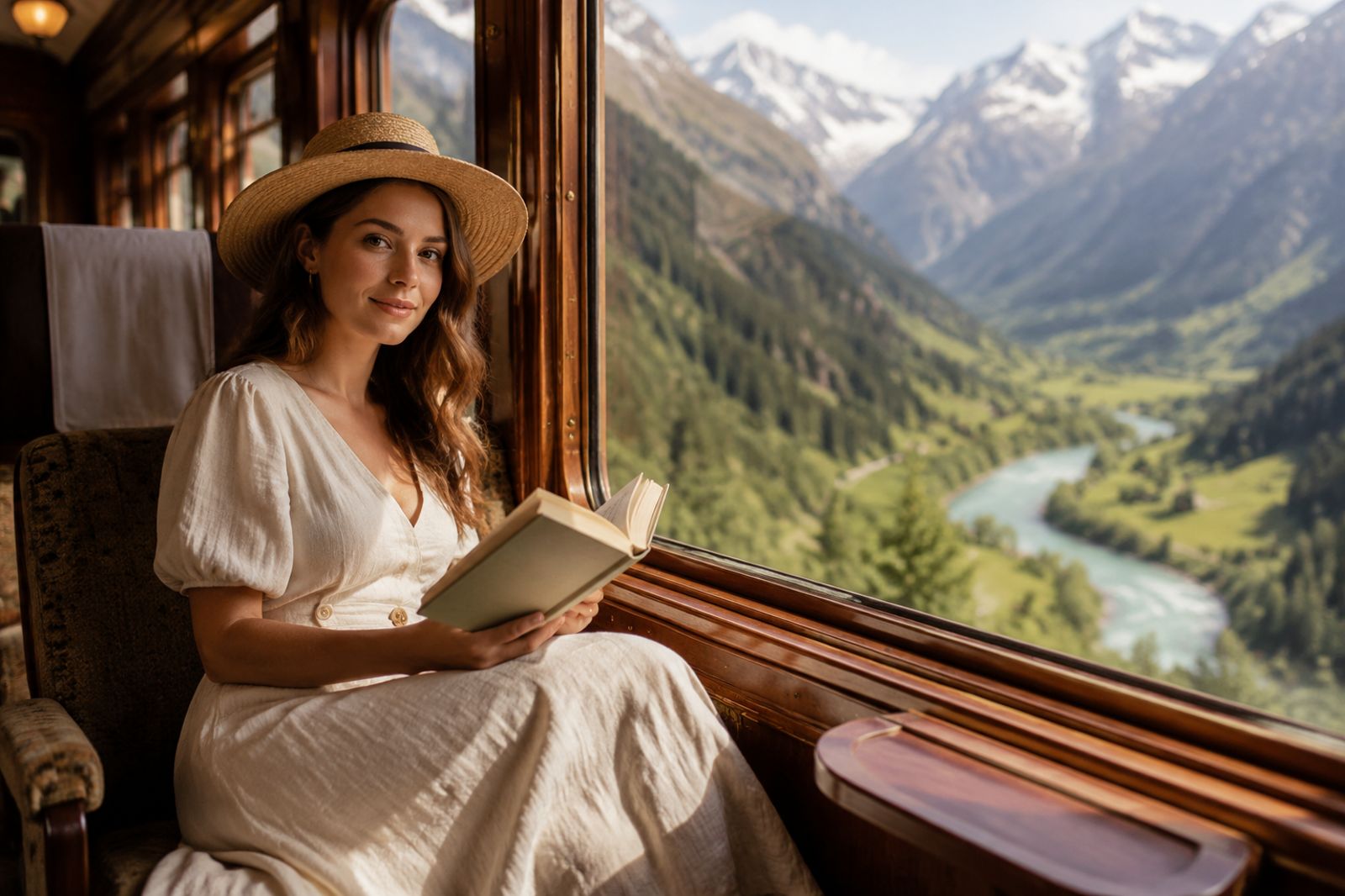
Woman in cream linen reading by a scenic train window with Alpine landscapes passing in golden afternoon light

The romance of train travel is having a quiet resurgence. As air travel grows increasingly chaotic and the carbon cost of flying becomes harder to ignore, trains offer something rare: a way to move that doesn't trade presence for speed. As of 2025, these seven journeys represent the finest expressions of slow travel by rail — each a masterclass in landscape, craft, and the luxury of taking your time. The best train journeys for slow travel share one quality: they make distance a feature, not a compromise.
| Journey | Route | Duration | Distance | Key Feature | |---|---|--- (as of 2025)|--- (as of 2025)|--- (as of 2025)| | Glacier Express | Zermatt → St. Moritz |8 hrs (as of 2025)|180 mi (as of 2025)|Six-course Alpine dining (as of 2025)| | West Highland Line | Glasgow → Mallaig |5.5 hrs (as of 2025)|164 mi (as of 2025)|Glenfinnan Viaduct (as of 2025)| | Bernina Express | St. Moritz → Tirano |4 hrs (as of 2025)|90 mi (as of 2025)|UNESCO Rhaetian Railway (as of 2025)| | Belgrade-Bar Railway | Belgrade → Bar |11 hrs (as of 2025)|296 mi (as of 2025)|254 tunnels, 435 bridges (as of 2025)| | Douro Line | Porto → Pocinho |3 hrs (as of 2025)|130 mi (as of 2025)|Port wine vineyard route (as of 2025)| | Shikoku Mannaka Sennen Monogatari | Various, Shikoku |3-4 hrs (as of 2025)|~120 mi (as of 2025)|Rural Japan handcrafted carriages (as of 2025)| | Bergen Railway | Oslo → Bergen |6.5 hrs (as of 2025)|305 mi (as of 2025)|Hardangervidda plateau crossing (as of 2025)|

1. The Glacier Express: Switzerland's Alpine Masterpiece
The Glacier Express connects Zermatt to St. Moritz over 180 miles (as of 2025) of Swiss Alpine terrain — taking a deliberate eight hours at an average of 22 miles per hour, as of 2025. Trains on this route are designed for panorama viewing, with floor-to-ceiling windows that frame the Matterhorn, the Rhine Gorge, and the Oberalp Pass at 6,670 feet. The Excellence Class carriage offers a six-course tasting menu that mirrors the changing landscape: a cheese course through the pastures of the Valais, a chocolate finish descending toward the Engadin Valley. Train travel at this pace isn't a compromise; it's the point.
2. The West Highland Line: Scotland's Harry Potter Corridor
Glasgow to Mallaig is a journey through the rawest edges of the Scottish Highlands (in service since 1901 and still one of Europe’s finest scenic railways as of 2025). The line crosses the Glenfinnan Viaduct — instantly recognisable to anyone who has watched Harry Potter — then winds past lochs, moors, and the silver-grey waters of the Atlantic. This route is accessible with a standard Interrail pass, making it one of the most affordable scenic train routes Europe has for independent travellers. The final approach to Mallaig reveals the Small Isles: Rum, Eigg, Muck, and Canna floating on the horizon. Journeys like this prove that the most memorable experiences are often the most accessible.
3. The Bernina Express: Switzerland to Italy Through the Clouds
The Bernina Express crosses the Swiss-Italian border via the UNESCO-listed Rhaetian Railway, climbing from St. Moritz to the Bernina Pass at 7,391 feet (as of 2025) before descending through spirals and 196 bridges into the Italian-speaking Val Poschiavo. Palm trees appear near Tirano — a startling transition from snow-dusted peaks to Mediterranean warmth in under four hours. This is slow travel Europe train experiences at their most dramatic: every turn reveals a new ecosystem, a new way of seeing the same mountain.

4. The Belgrade-Bar Railway: Europe's Best-Kept Secret
The Belgrade-Bar Railway cuts through the Dinaric Alps connecting Serbia to the Montenegrin coast — one of the most underrated journeys on the continent. With 254 tunnels and 435 bridges (as of 2025) across 296 miles, the route is an engineering marvel that barely registers in English-language travel media. The landscape shifts from Serbian lowlands to the Tara River Canyon (the deepest in Europe) and finally to the Adriatic coast at Bar. This is sustainable train travel at its most raw: no luxury carriages, no tasting menus — just remarkable geography and the satisfaction of crossing a country by steel and gradient.
5. The Douro Line: Portugal's Vineyard Corridor
Porto to Pocinho follows the Douro River through terraced vineyards that have produced port wine for centuries. The train runs close to the water, offering sightlines into the quintas (wine estates) along both banks. Passengers can disembark at stops like Pinhão, where the azulejo-tiled station depicts the grape harvest, and walk directly into a tasting room. This route collapses the distance between transport and destination: the journey itself becomes a culinary and cultural immersion. For travellers weighing train travel vs flying sustainable options, the Douro Line makes an unassailable case — you cannot fly through a vineyard.
6. Why the Shikoku Mannaka Sennen Monogatari?
Shikoku's Mannaka Sennen Monogatari takes the opposite approach from Japan's famous bullet trains, offering some of the best train journeys slow travel enthusiasts dream about. This local express train traverses rural Shikoku at a modest pace, with carriages finished in local cedar and washi paper, and meals that change with the season. The route runs through the Iya Valley's vine bridges, terraced rice fields, and mountain temples from the Heian period. Luxury train journeys often mean gilded carriages and champagne; this one proves that true luxury is a seat in a wooden carriage watching a farmer harvest rice under a hundred-year-old mountain.

7. The Bergen Railway: Oslo to Norway's Fjord Coast
The Bergen Railway crosses the Hardangervidda plateau — Europe's largest high-mountain plateau — over 6.5 hours from Oslo to Bergen. The landscape passes through birch forests, alpine tundra, and the frozen Lake Finse before descending through tunnels into the fjord country. In winter, the train runs through snow so deep that the tracks are flanked by walls of white taller than the carriage. This is among the most dramatic scenic train rides in Northern Europe — one of the best train journeys for slow travel simply because the terrain forbids urgency: the Hardangervidda is vast, empty, and utterly absorbing.

Why These Seven Journeys Were Chosen
The seven journeys above were chosen not for speed or luxury alone, but for how each reframes travel itself. Whether crossing the Dinaric Alps or the Scottish Highlands, the rhythm of rail travel — the click of tracks, the slow unveiling of landscape — allows a depth of attention that flying erodes. Train travel reduces emissions by up to 96.5 percent compared to flying (as of 2025 data). On a quarter of 114 European routes, train tickets are cheaper and greener than plane tickets (2025). The Berlin-to-Prague journey is 30 times more environmentally friendly by rail. The question is not whether you can afford the time; it is whether you can afford to keep moving without noticing where you are.
What is the most scenic train ride in Europe?
The Glacier Express (Zermatt to St. Moritz) and the Bernina Express (St. Moritz to Tirano) are widely considered Europe's most scenic rail journeys, offering eight and four hours of continuous Alpine panorama respectively.
Is it cheaper to fly or take a train in Europe?
On approximately one in four European routes, train travel is both cheaper and more environmentally friendly than flying, according to 2025 route analysis. Budget airlines still undercut rail on some major corridor routes, especially when booked well in advance.
How much lower are train emissions compared to flying?
Train travel produces up to 96.5 percent fewer CO₂ emissions per passenger-kilometre than flying on equivalent routes, making it the most sustainable long-distance travel mode available as of 2025.
What is the best train trip for slow travel beginners?
The Douro Line in Portugal or the West Highland Line in Scotland offer accessible, affordable introductions to slow travel by rail — both are under five hours and require minimal advance booking.
Can you do scenic train travel without a luxury budget?
Absolutely. Journeys like the West Highland Line, the Belgrade-Bar Railway, and the Bergen Railway are accessible with standard Interrail passes or regular ticketing. Luxury carriages are optional, not required.

The Complete Guide to Slow Travel: Depth Over Distance
Embrace slow travel — a mindful approach to exploring that prioritizes depth, local connection, and sustainability over rushed itineraries.

12 Best Eco Resorts for Slow Travel That Nurture the Soul
Discover 12 best eco resorts for slow travel worldwide — from solar-powered Maldivian luxury to off-grid Costa Rican sanctuaries that nurture the soul.

10 Slow Living Practices to Bring Home From Your Journey
Explore 10 slow living practices to enhance your life and travel experiences. Embrace mindfulness and intentionality in your daily routine.